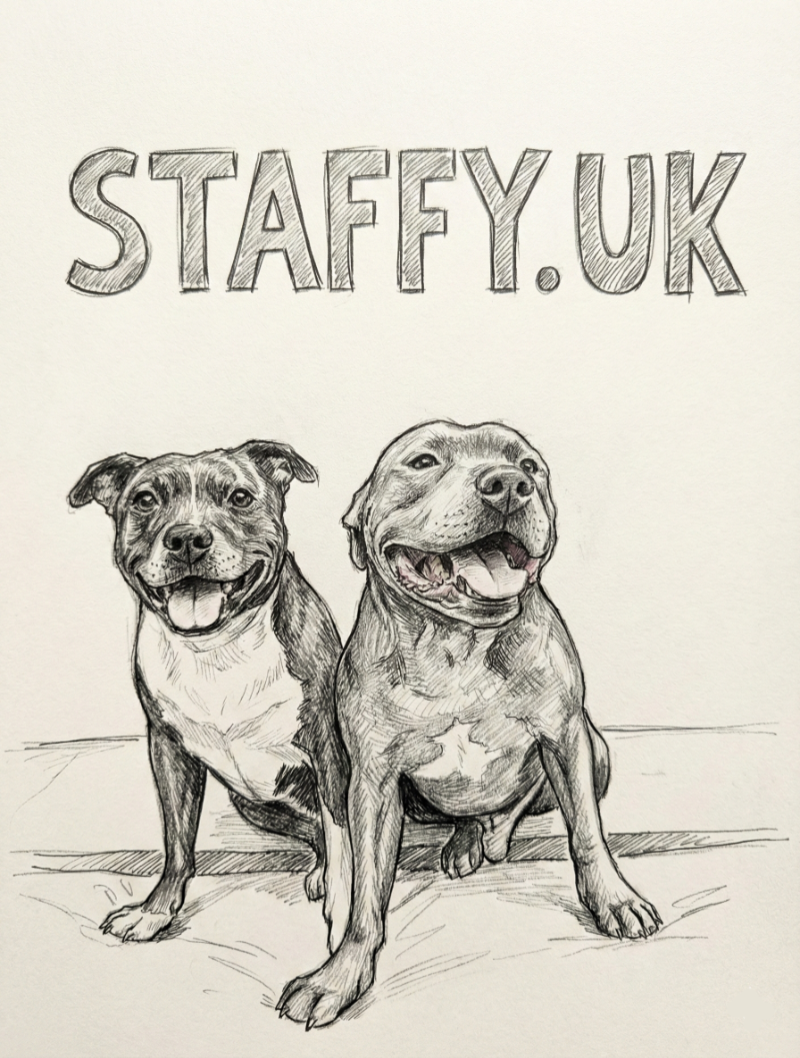
If you visit a rescue centre anywhere in the UK, the same thing will strike you. Brown eyes. Square heads. Waggy tails. Staffies and Staffy-crosses, everywhere you look, pressing their faces against the kennel doors, desperate for attention that barely comes often enough.
It's not a coincidence and it's not a mystery, though the full answer is more complicated than a single cause. Understanding why Staffies fill rescue centres matters — because the causes are things we can actually do something about.
They're Enormously Popular — and That's Part of the Problem
Staffies are one of the UK's most popular breeds, particularly in urban areas and working-class communities. They're affordable, adaptable, short-coated, and robust. They're brilliant with children. They don't need a vast garden. For lots of families, they're the obvious choice.
But popularity brings volume — and volume increases the raw number of dogs that end up in rescue even if the percentage staying in their homes is perfectly reasonable. When you have hundreds of thousands of Staffies in the UK, even a small percentage finding their way to rescue represents an enormous number of dogs.
This isn't unique to Staffies. Labrador numbers in rescue are also significant. But the difference is that Labradors get rehomed quickly. Staffies don't.
The Stigma Makes Them Hard to Rehome
This is the critical compounding factor. A Labrador that enters rescue will typically find a new home in a matter of weeks. A Staffy might wait months. Sometimes much longer.
The reason is the stigma. Prospective adopters who haven't done the research arrive at a rescue centre with assumptions — shaped by tabloid coverage, by casual prejudice, by half-remembered stories — and walk past the Staffy kennels to find something that feels safer. Even when the rescue staff explain the dog's actual temperament. Even when they see the dog's behaviour with their own eyes.
The result is a bottleneck. Staffies come in at a normal rate and go out at a much slower rate. The centres fill up. More dogs wait longer. The longer they wait, the more the kennel environment affects their behaviour — which makes them harder to place — which makes them wait longer still.
The kennel problem: Staffies do particularly badly in kennels because they are so family-oriented. A dog bred over centuries to be with people, placed alone in a kennel, becomes anxious, loud, reactive, and over-excited when anyone approaches. None of these are the dog's true character. All of them make adoption less likely. It's a cruel cycle.
Impulse Purchases and Inadequate Research
Staffies are often bought cheaply and quickly — from advertisements, from people whose dog has had a litter, sometimes from less scrupulous breeders. The price of entry is low. The commitment required is not.
Staffies need exercise, stimulation, training, company, and consistent boundaries. They can be stubborn. They can be boisterous, especially as young dogs. They can be selective about other dogs. None of this is a problem for a prepared owner — but for someone who bought a cute puppy without understanding the breed, it can be overwhelming.
When the reality doesn't match the expectation, the dog gets surrendered. This isn't unique to Staffies, but it disproportionately affects them because of how accessible they are as a breed and how intense their need for company and engagement can be.
Housing and Landlord Restrictions
This is a significant and often-overlooked driver of Staffies entering rescue. Many landlords in the UK either ban pets entirely or specifically exclude bull breeds. When a Staffy owner's circumstances change — relationship breakdown, job loss, a house move — they may simply be unable to find housing that will accept their dog.
This situation has worsened as rental prices have increased and more people are renting rather than owning. A family who would keep their dog if they could buy simply cannot find a rental that will take a Staffy. The dog goes to rescue through no fault of the owner and no fault of the dog.
Campaigners have pushed for changes to standard tenancy agreements to make it harder for landlords to blanket-ban pets. Progress has been slow.
Irresponsible Breeding
Because Staffies are popular and puppies are easy to sell, there is significant irresponsible breeding. Litters produced without health testing, without consideration of temperament, without any commitment to where those dogs will end up. Some of these dogs have health problems. Some have temperament issues arising from poor early socialisation. Many simply flood a market that is already producing more Staffies than there are suitable homes for them.
Responsible breeders — those who health test, who socialise properly, who vet buyers rigorously, who take dogs back if owners can no longer cope — are doing it right. But they're not the whole picture, and in a breed this popular, the irresponsible end of the market does real damage.
What This Tells Us About the Dogs Themselves
Here is what's important to understand about all of this: not a single one of these causes is about the dogs being bad dogs.
Staffies are in rescue because they're popular. Because media coverage makes them hard to rehome. Because some owners don't do the research. Because rental housing excludes them. Because irresponsible breeders flood the market. Because their family-oriented nature makes kennels devastating for them in a way that compounds the problem.
None of that is the dog's fault. Every one of those things is something humans have done, or failed to do.
The Staffy pressing its face against the kennel door, wagging its tail at every visitor, desperate to find its person — that dog has done nothing wrong. It has been let down by the systems around it.
What You Can Do
Understanding the problem is the first step. The second step is doing something about it. Here are the things that make the most direct difference:
- Adopt, don't shop — if you're thinking about getting a Staffy, go to a rescue first. The dog you'll find there will be assessed, supported, and desperately grateful.
- Foster — rescue organisations are always short of foster carers. Fostering removes a dog from a kennel environment, improves its behaviour and wellbeing, and makes it far more adoptable.
- Donate — kennel costs, vet bills, and behavioural support are expensive. Every donation goes directly to keeping dogs alive and cared for while they wait.
- Counter the misinformation — when you hear someone repeat myths about Staffies, politely correct them. Share accurate information. Change one mind, and you might change one dog's fate.
- Come to our events — we're raising money for Staffy rescue charities through events. Join us.
Staffies are extraordinary dogs sitting in rescue centres, waiting for someone to look past the stigma and see them clearly. Everything else about them — the loyalty, the comedy, the love — is there, waiting to be discovered.
They just need someone to open the door.